Q & A
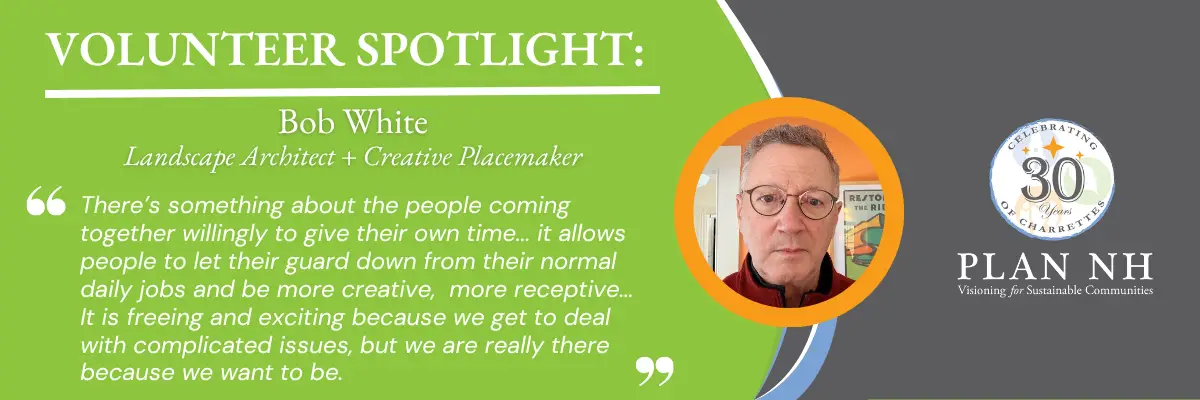
with Bob White, Landscape Architect + Creative Placemaker, Plan NH Board Member
How did you first become involved with the Plan NH Charrette Program, and what drew you to volunteer in the beginning?
I remember first being invited to cross the Connecticut River to participate in Plan New Hampshire charrettes in Enfield and Hanover. My office was in Vermont, but right in White River Junction and I could see New Hampshire across the river out my window. I was welcomed wonderfully by Robin and other members of the Plan New Hampshire community. It was a wonderful professional bridge and now that I live in New Hampshire, it makes even more sense.


What keeps you coming back to participate in charrettes year after year?
I have always felt that work in planning and design is a matter of personal and professional guiding each other. Professionally working with New Hampshire communities on the charrettes has been a way to bring my and compliment the other skill sets of other Plan New Hampshire volunteers to listen and see opportunities that sometimes the local Community hasn’t had the opportunity to undertake. Planning is not easy, design is not easy and whether it’s part of the communications or whether it’s the artistic or creative skills or the environmental, Historical, cultural, housing other skills that we have as designers, they don’t tend to reside as a skill set of the general population of a community. It’s an opportunity to elevate the conversation, but it’s also an opportunity to observe the community speaking within itself.
Is there a particular charrette moment or project that stands out as especially meaningful to you?
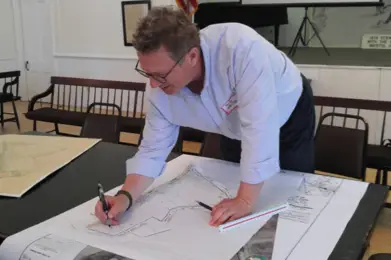
I think Manchester has been my most poignant place of revelation and meaning because the international community there as well as the challenged homeless community is really representative of cities across America and here it is encapsulated within our largest city in New Hampshire. Our recent charrette in Manchester, New Hampshire, looking at a transportation corridor, through the central neighborhoods of the city was most pointed because we had a huge representation of the immigrant population of that neighborhood come to our listening sessions. Seeing an international representation of children and mothers and grandmothers appear at the listening session in their wonderful clothing from around their world, but speaking from their hearts of the challenge, it is to move to a whole new place with the barriers of language and economics and social acceptance. Translating that into a design of their place so that the neighborhood could be improved and made safer and more comfortable and beautiful was a huge lift, knowing that these people had come from places challenged by things that we have no sense of in New Hampshire. Countries at war. Designing a homeless shelter for hundreds of people in Manchester was also a huge challenge. I remember having lunch with the residents. They were people of such honor and dignity yet they were so much a victim of their circumstances or their own personal challenges. You had to submit to a wave of grief, but translate that into compassion to try to do something good for them. but I will always remember and treasure working side-by-side with Steve Hebsch where we designed an entire city block devoted to the homeless Community in a day.

How have you seen the charrette program evolve during your time as a volunteer?
The challenges of Society, economics and environment for communities which tend to have a resistance to change, even though the change is happening all around them has raised the bar of the complexity of Charrettes. It used to be that task raised in a Charrette was fairly straightforward. We think we would like a park. We think we would like some more housing. We need to improve our downtown because it has empty storefronts. Now it’s a lot more complicated.
What impact do you believe the charrettes have had on New Hampshire communities?
I believe Plan New Hampshire Charrettes have led the way to many many communities finding a voice and a direction for themselves. It can be a long process and a Charrette is usually the beginning of it... but it is vision is encouragement and support and if done properly, it has been given the process legs to then proceed.
In what ways has volunteering with Plan NH influenced your own professional or personal growth?
Plan New Hampshire has been a personal and professional journey. I can say that Plan New Hampshire’s role in my professional life has been basically in the role of mentorship and support. Being a sole practitioner or a business owner is a lonely business, and then coming into a charrette context. I know that I have been supported and guided, encouraged... respected. And that has made a huge difference over almost 20 years. In Chichester, I was mentored by Steve Whitman and other others, as I was going through a major life transition. That is a life mile marker that my memory treasures.
What do you enjoy most about collaborating with multidisciplinary teams during a charrette weekend?
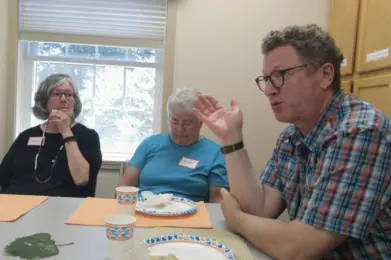
I work in multidisciplinary teams all the time, but there’s something about the people coming together willingly to give their own time... it allows people to let their guard down from their normal daily jobs and be more creative more receptive, spend more time listening than when you’re on the clock at the office. It is freeing and exciting because we get to deal with complicated issues, but we are really there because we want to be.
As Plan NH celebrates 30 years of charrettes, what message or reflection would you like to share about the program’s legacy?
I think we have a lot to share with the entire state of New Hampshire because we have a process that is not particularly well-exercised at municipal government levels. Plan New Hampshire is a creative and responsive process; we listen before we make decisions. I see a lot of local governments struggling because they don’t have the technical background to support the ideas of the community. We are a huge resource for that. A community gets 20 people contributing 800 - 1000 hours of expertise thinking about their challenges for any given charter and report. I think it’s also important that we have a huge success rate. I know other entities also do charrettes but I could say that some of those have said “we’ve done 10 charrettes and nothing has ever come from them.” I’m not saying we have bragging rights at Plan, but we actually do.
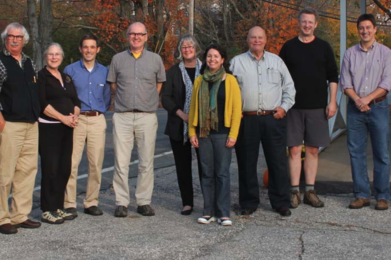
Plan NH is grateful for Bob's participation on the following Charrette Teams:
- Hanover 2013
- Chichester 2014
- Laconia 2015
- Kingston 2016
- Nashua 2016
6. Wilton 2017
7. Bristol 2018
8. Moultonborough 2018
9. Manchester 2019
10. Rye 2019
11. Wolfeboro 2021
12. Brentwood 2023
13. Manchester 2023
14. Manchester 2025
15. Nashua 2025