Event Highlights | Contoocook Village Workshop & Walking Tour
Highlights from Plan NH's Spring Workshop: Stay, Work Plan: Supporting Supporting Village Centers for Future Generations
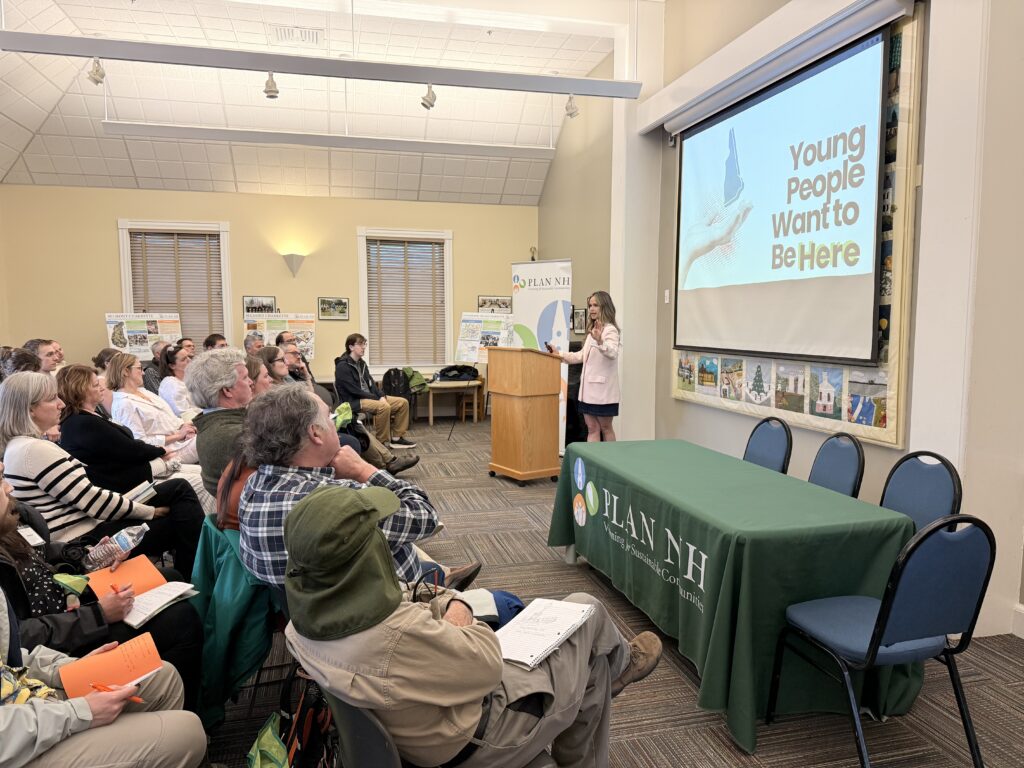
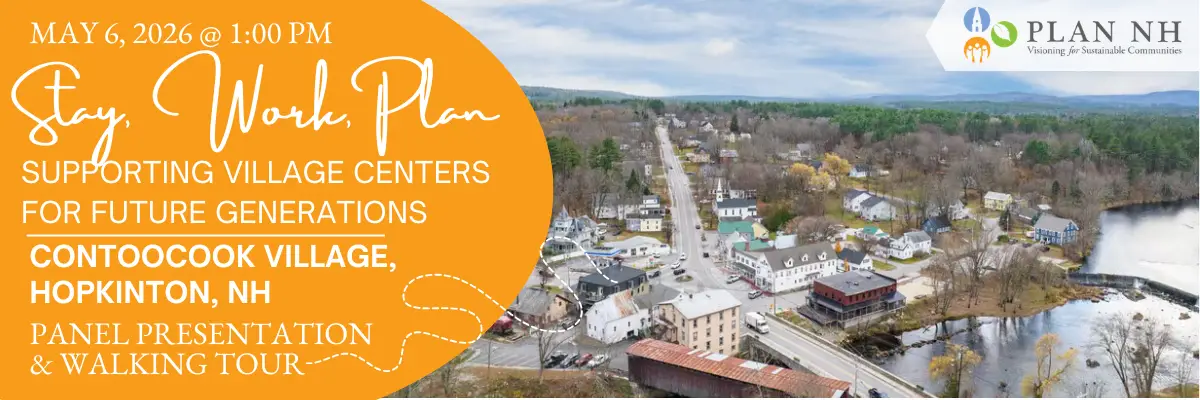
On May 6, 2026, Plan NH gathered planners, designers, and community and industry leaders at the Hopkinton Town Library in Contoocook Village for its annual Spring Workshop. The theme – Stay, Work, Plan: Supporting Village Centers for Future Generations – brought together five panelists and several local tour guides to tackle one of New Hampshire’s most pressing challenges: how to make its communities places where the next generation actually wants to live.
Read on for a very brief summary of the day,
with workshop resources posted below!
The Urgency Is Real
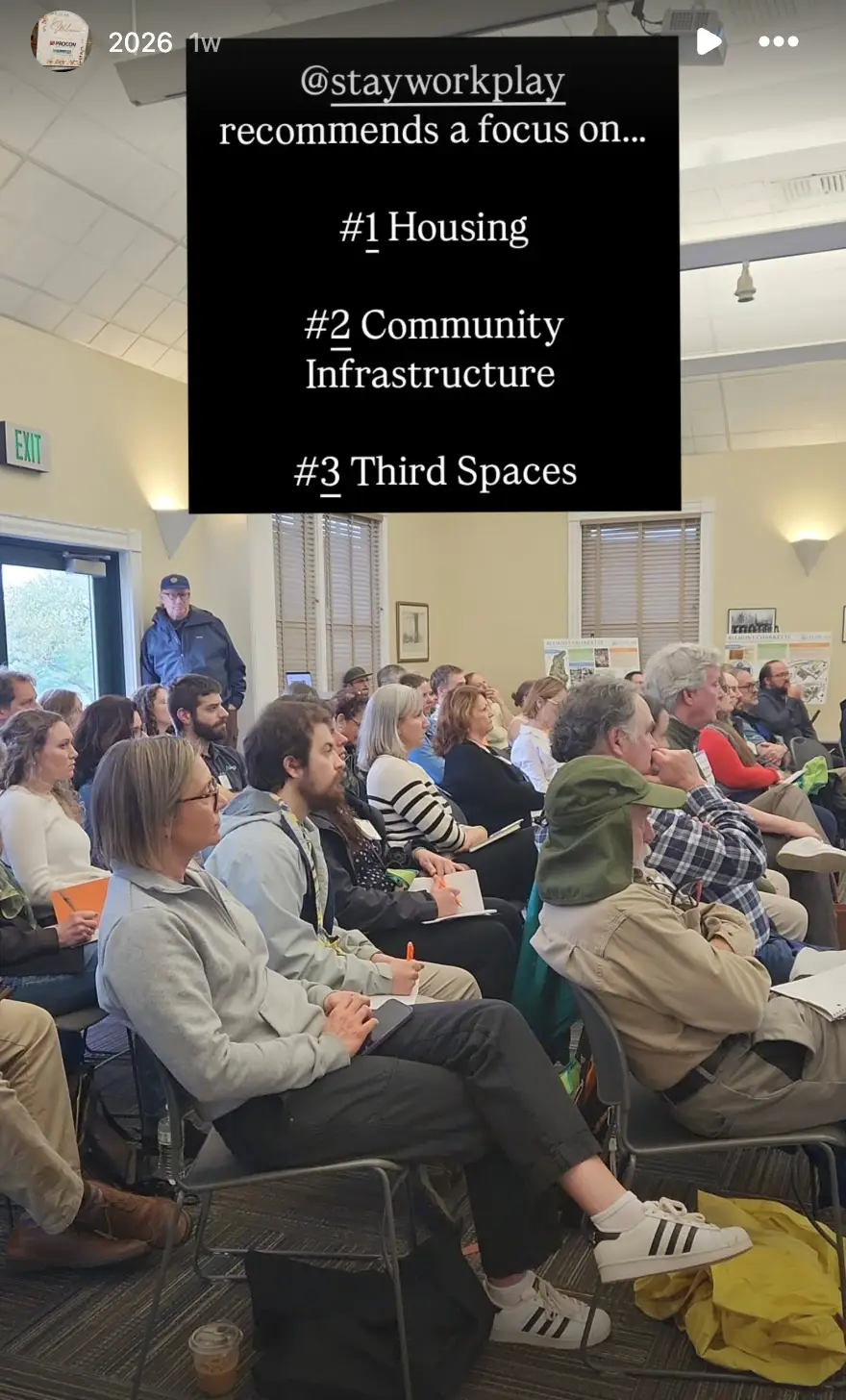
Stay Work Play NH Executive Director Corinne Breton-Benfield opened with a bracing set of facts: New Hampshire has the second-oldest population in the country (average age 43), our state legislators average 66 years old, and we has the oldest workforce in the nation. In late 2025, SWP released their Quality of Life Index, in which the high majority of those surveyed say housing and childcare areless available and less affordable here than in other states. Over half of young people surveyed say the state has gotten worse over the past year for social life and sense of community. Young people have deep roots here and want to be here – but they are often deterred by concerns about affordability and community connection. Addressing this requires a shift toward future-focused, village-scale solutions in housing and infrastructure.
What Makes a Village Center Work?
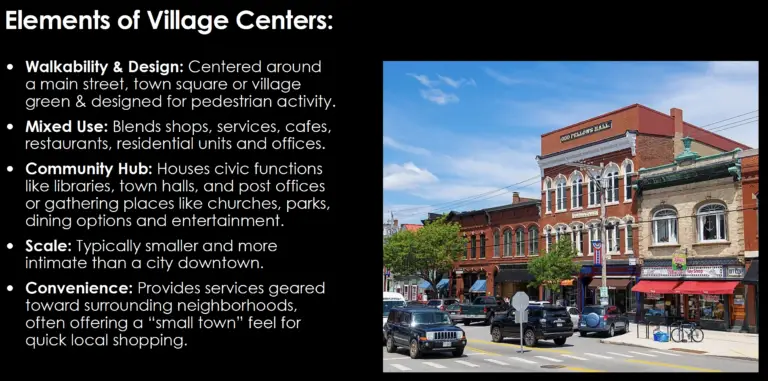
Architect and planner Thomas Battcock-Emerson of Studio B-E offered a grounding framework for the day. A vibrant village center serves as a genuine community hub by being walkable, mixed-use, and human-scaled (i.e. buildings create “outdoor rooms” by defining the street and are generally two-to-three story heights). Critically, a compact housing development pattern is the single strongest driver of a village center’s economic viability – roughly 2,000 households are needed to sustain a healthy commercial core. His recommendations? Embrace missing middle housing, form-based codes, and adaptive reuse ordinances as the regulatory toolkit for unlocking village center potential.
Peterborough’s Practical Playbook
Danica Miller, Peterborough’s Director of Planning and Building, was unable to join us in person, but she created a voice-over video for her slides (available below), sharing how her town uses tools like Tax Increment Financing (TIF) and RSA 79-E to revitalize historic buildings. Peterborough also utilizes creative public engagement, such as ADU tours and student design challenges, to build community support for new development.
Nature as a Village Center Asset
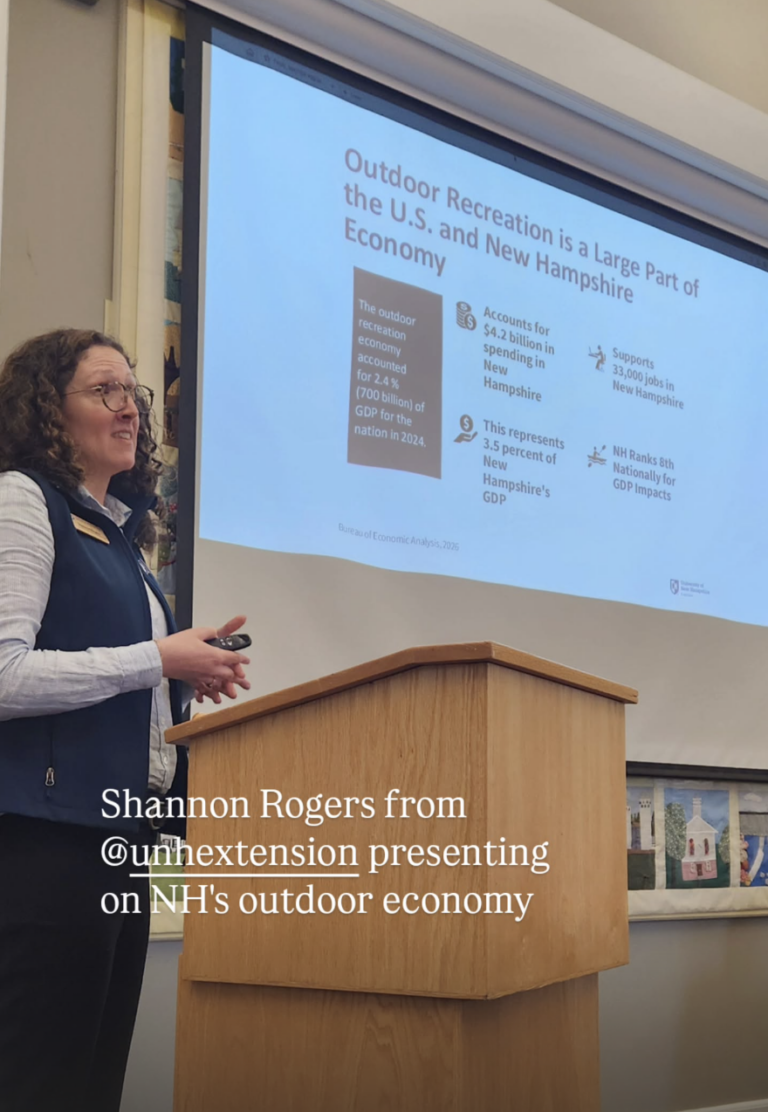
Shannon Rogers, Ph.D., of UNH Cooperative Extension brought a compelling economic lens to outdoor recreation. The outdoor recreation sector accounts for $4.2 billion in spending and 33,000 jobs in New Hampshire, representing 3.5% of the state’s GDP. UNHCE’s Downtowns & Trails program demonstrates that connecting village centers to trails, rivers, and natural amenities creates measurable economic benefits while building community pride and social connection.
The Lamoille Valley Rail Trail: A Vermont Case Study
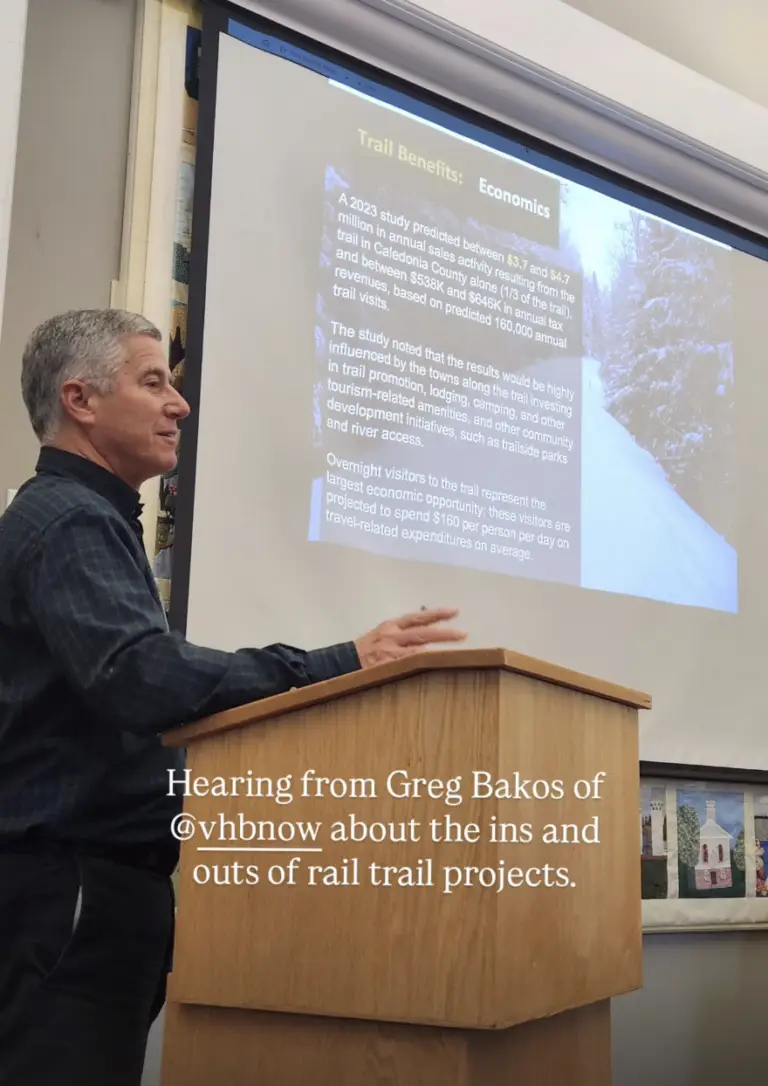
Greg Bakos, P.E., of VHB Inc. detailed the full story of one of the region’s “gold-standard” long-distance trails – Vermont’s 95-mile Lamoille Valley Rail Trail – from its origins as a railroad through its $31 million conversion into a four-season multi-use trail serving 18 communities. The lesson for New Hampshire is significant: a 2023 economic study projected $3.7–$4.7 million in annual sales activity from the trail in just one county. Communities that invest in trail amenities – trailhead facilities, wayfinding, river access, lodging – see the greatest return. Closer to home, the Concord–Lake Sunapee Rail Trail passes directly through Contoocook Village, where the walking tour portion of the day’s event highlighted existing assets and future opportunities along the corridor.
The Walking Tour
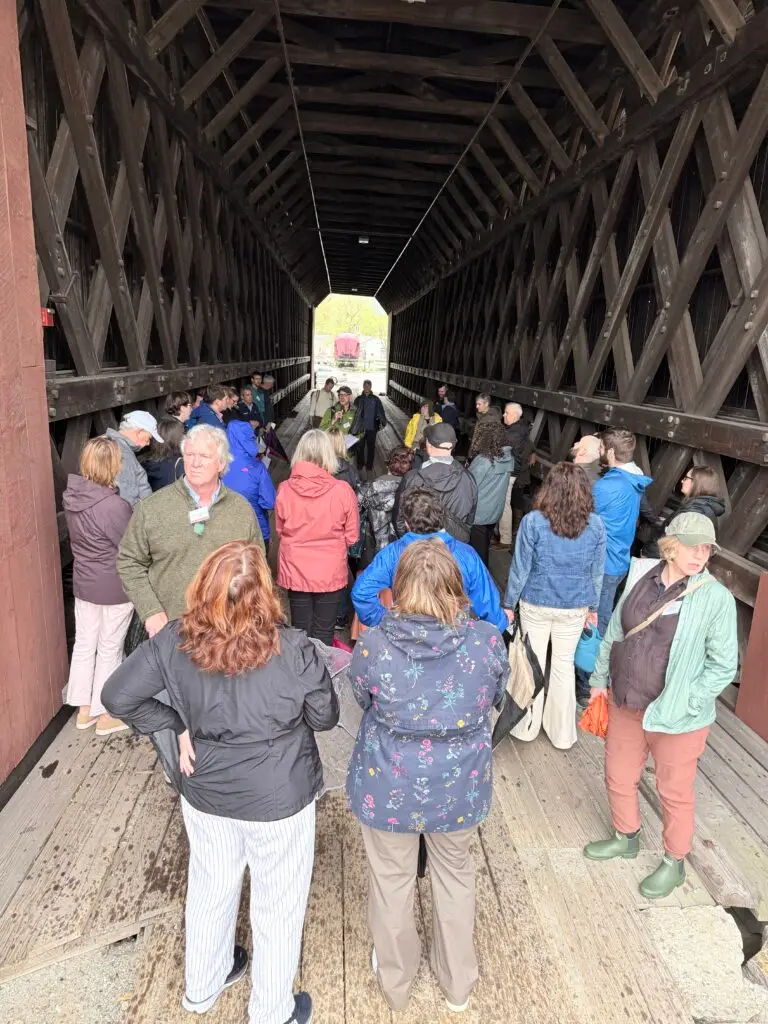
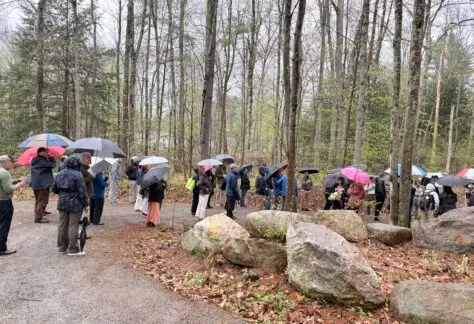
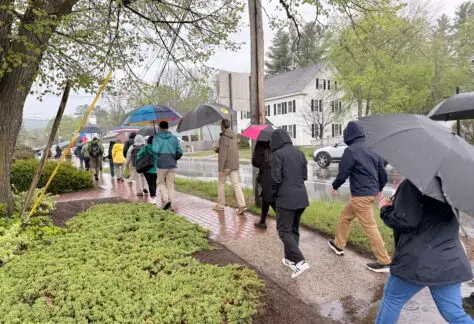
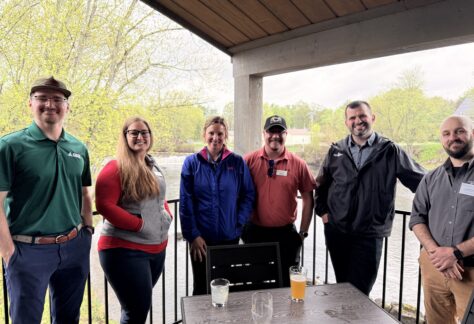
After fueling up with hot coffee and cold brew provided by Witching Hour Coffee and Provisions of Contoocook, participants moved out into the drizzle, following a seven-stop tour of Contoocook Village. Tour stops included the Concord-Lake Sunapee Rail Trail, hopeful future redesigns of troublesome intersections, Riverway Park’s beloved covered railroad bridge, Two Villages Art Society (an non-profit art gallery renting space in a municipal building), and lovingly restored mixed-use buildings. Local tour guides explained along the way how planning tools, community investment, and natural assets can reinforce one another in a working village center. The walking tour of showcased how historic preservation and modern planning work together to create a vibrant, multi-generational community.
The After Hours Reception & Networking
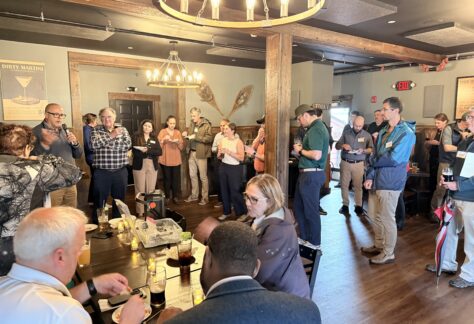
The day wound down at Contoocook’s newest establishment, Cedar & Main Tavern. Owned and operated by Contoocook Native, Brian Cressy. Cressy explained how the use of NH’s Community Revitalization Tax Incentive (RSA 79-E) was key piece of the puzzle in the economics of renovating the old building. The food and drink were delicious and the ambiance and river views exceptional!