
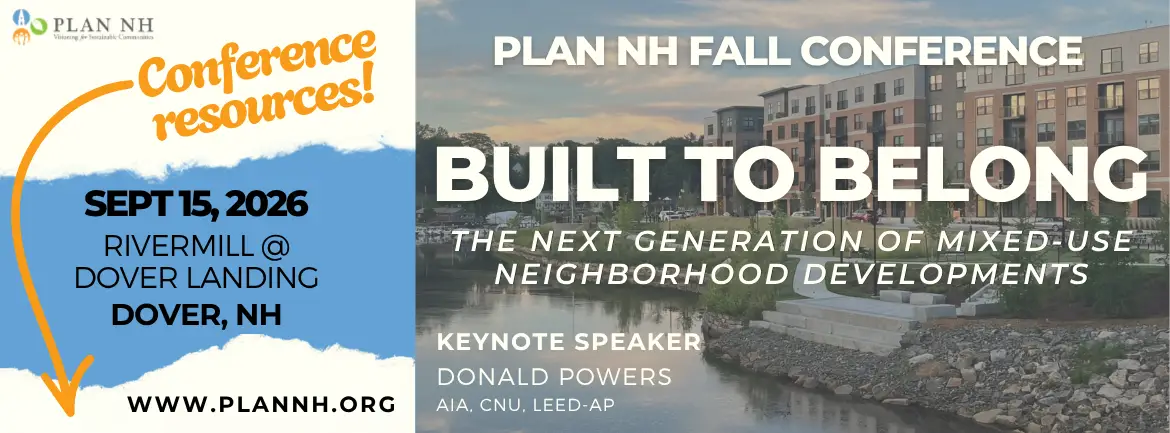
Thank you to everyone who joined us for the 2026 Plan NH Fall Conference!
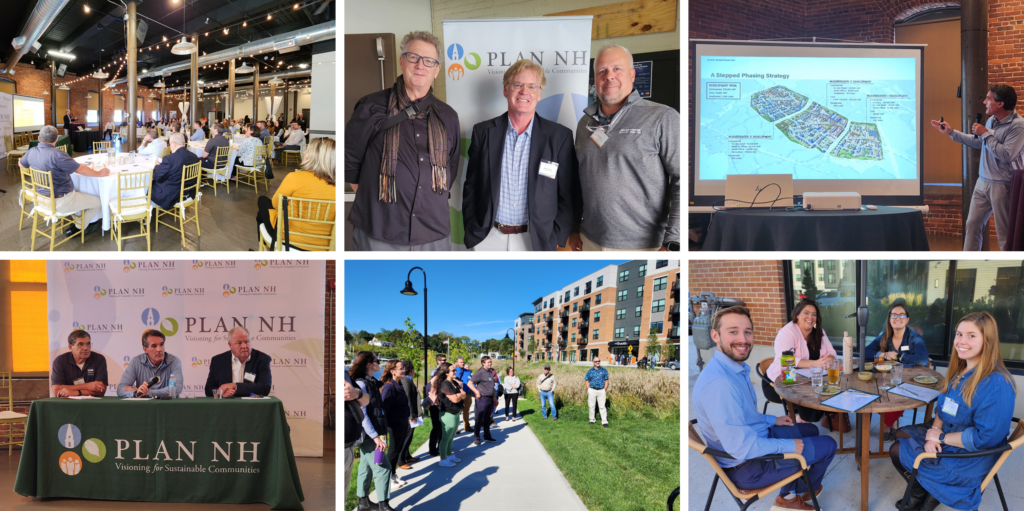
More than 85 planners, architects, engineers, developers, municipal leaders, community members, and other built-environment professionals gathered at Rivermill at Dover Landing on September 15 for a day of learning, conversation, and connection focused on a growing question in New Hampshire: How do we create new neighborhoods that offer more than just places to live?
Under the theme “Built to Belong: The Next Generation of Mixed-Use Neighborhood Developments,” this year’s conference took a closer look at new, mixed-use “live, work, play” developments and the ways they are being designed to become destinations and neighborhoods in their own right. Rather than focusing solely on individual buildings or residential units, we explored how new developments can incorporate housing, businesses, public spaces, recreation, dining, and gathering places to create communities where people can live, work, spend time, and plant their roots.
Meeting the Moment
We kicked off the day with a keynote from Donald Powers, AIA, CNU, LEED-AP, Principal and President of Union Studio Architecture & Community Design.
In his presentation, “Meeting the Moment: Building Better Residential and Mixed-Use Places in New Hampshire’s Towns and Villages,” Donald encouraged attendees to think about how good design can help a development feel like a real place and how communities can respond to changing housing and development needs while creating neighborhoods with a strong sense of identity and belonging. He also shared strategies and tools to help municipalities make mixed-use developments successful, integrated parts of their community. His presentation set the stage for a day of exploring what “live, work, play” can look like in practice.
Looking at New Development in NH
Throughout the day, we examined three different examples of mixed-use development and the ideas, partnerships, and planning decisions behind them.
Our morning began with Woodmont Commons in Londonderry, where John Farrell, Kevin Smith, and Bob Duval shared perspectives on the development of this large-scale mixed-use neighborhood. The discussion explored the long-term vision for creating a community that combines residential, commercial, recreational, and civic uses, and the infrastructure and planning required to support a new neighborhood of this scale.
Next, we turned to Laconia Commons, where Kevin Smith and Bob Duval were joined by Rob Mora and Tyler Carmichael to discuss the development and the City of Laconia’s role in bringing a new mixed-use community to the area. The conversation highlighted the opportunities and considerations that come with creating a new place that incorporates housing, businesses, and gathering spaces.
From the Conference Room to the Waterfront
In the afternoon, we shifted our focus to Dover’s Cocheco Waterfront District, hearing from Donna Benton, Dana Lynch, and Rob Simmons about the district’s development and vision for the future.
Attendees then headed outside for a walking tour led by representatives from the City of Dover, the Cocheco Waterfront District Advisory Committee, and Cathartes. Seeing the waterfront district firsthand provided an opportunity to connect the day’s conversations about mixed-use development, public spaces, connectivity, and placemaking with the physical environment.
The tour also offered a chance to see how new development can build on the existing character and assets of a community while creating opportunities for people to live, work, gather, dine, and enjoy the waterfront.
What Makes a Place Feel Like a Place?
A common thread throughout the day was that successful mixed-use development is about more than putting different uses next to one another. Creating a true live, work, play neighborhood requires thinking about how people will move through a place, where they will gather, what they will do there, and what will make them want to stay.
The developments we explored demonstrated different approaches to creating new neighborhoods and destinations, while also highlighting the importance of context, connections, public spaces, housing, businesses, recreation, infrastructure, and community identity.
For Plan NH, these conversations are at the heart of our work: bringing together the people who plan, design, build, and shape New Hampshire communities to share ideas and learn from one another.
Conference Materials and Resources
View the conference agenda here. Read our speaker bios here. View event photos here.
Presentation Slides:
- Kick Off Slides – view slides (PDF)
- Meeting the Moment: Building Better Residential and Mixed-Use Places In New Hampshire’s Towns and Villages – by Keynote Speaker Donald Powers – view slides (PDF)
- Woodmont Commons (Londonderry) – by Kevin Smith and Bob Duval – view slides (PPT/PDF)
- Laconia Commons (Laconia) – by Kevin Smith and Bob Duval – view slides (PDF)
- Laconia Commons (Laconia) – by Rob Mora and Tyler Carmichael – view slides (PPT/PDF)
- Cocheco Waterfront District (Dover) – by Donna Benton and Dana Lynch – view slides (PPT/PDF)
- Cocheco Waterfront District (Dover) – by Rob Simmons – view slides (PPT/PDF)
An additional resource that was mentioned during Q&A was a report published by New Hampshire Housing titled From Homes to Classrooms: The Relationship Between Housing Development and School Enrollment in New Hampshire. This study, like similar studies conducted in the past, shows minimal correlation between new housing and school enrollment growth. Check out the full report here and the one-page fact sheet here.
Thank You
Thank you to Don Powers and all of our speakers, tour leaders, volunteers, and attendees for making the day such a great opportunity for learning and connection. And of course, thank you to TFMoran, NHSaves, and all of our sponsors who made this day possible!